
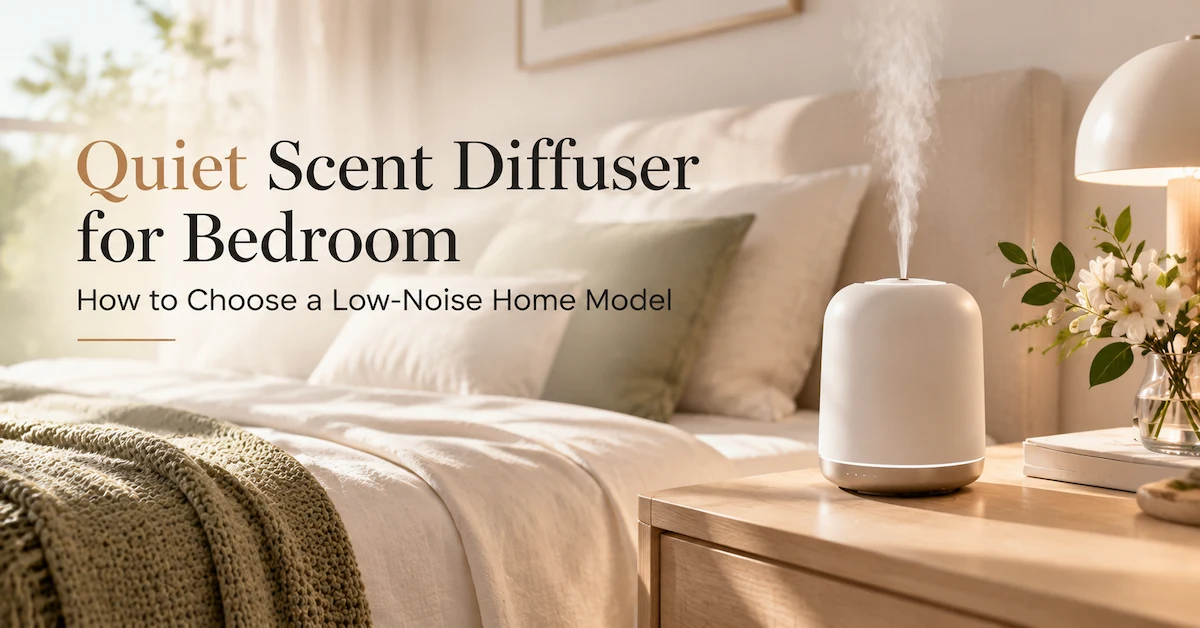
Quick answer: For a bedroom, start with a scent diffuser whose published noise specification is below 32 dB, then verify the same model in the exact operating mode, with the intended oil and bottle installed, at the distance where you sleep. In the current Scentsin product data, CNUS Stream2 and CNUS X3Art each list a noise level of less than 32 dB; X3Pro lists less than 34 dB; and X2mini lists less than 38 dB. Stream2 is the most complete bedroom-oriented recommendation because its page identifies it as a home scent diffuser, lists quiet working, aluminum construction, 400 m3 coverage, 150 ml capacity, and Bluetooth control. The number is a product specification, not an independent bedroom test, so a buyer should confirm the measurement method and listen for start-up, pump, vibration, and bottle noises before choosing a unit for sleep.
The search for a quiet scent diffuser for bedroom is a commercial investigation. The buyer needs low audible disturbance, comfortable overnight fragrance, enough room coverage, and a refill path that will not leak or create extra noise. A model can be quiet in a product photograph and still click at start-up, vibrate on a hollow nightstand, or sound louder at its highest output.
This guide is deliberately narrower than a general home diffuser selection article. It focuses on sleeping areas, reading rooms, nurseries where the product is otherwise appropriate, and small guest rooms. It uses model-level specifications from Scentsin product pages, not invented laboratory results. Where the public page does not state a measurement method, the wording remains qualified and the article provides a practical test protocol.
Review the Quiet Stream2 Home Model
What Makes a Scent Diffuser Quiet Enough for a Bedroom?
A diffuser is bedroom-quiet only when its total sound is acceptable in the room, at the time of use, and at the listener's position. The total sound can include an atomizer or pump, a fan or airflow path, a power adapter, a relay or control click, and vibration transferred into furniture. It can also include the oil bottle or housing resonating against a wall or shelf. A published dB value is useful because it gives the buyer a starting point, but it does not describe every sound a person may notice during a silent night.
For comparison, a device listed below 32 dB is a stronger candidate on paper than one listed below 38 dB. That does not mean every person will hear the difference in the same way. The room's background noise, floor construction, bed position, HVAC cycle, and personal sensitivity matter. A bedroom next to a street may mask a faint diffuser sound, while a quiet interior room can reveal a small vibration that would not be noticed elsewhere.
Five sound sources to check
- Atomization sound: cold-air or nebulizing components may create a soft hiss, pulse, or short burst when fragrance is released.
- Motor or pump sound: an internal motor may be quiet at low output and more noticeable when the schedule or intensity increases.
- Vibration: a compact unit can transmit a low hum into a wooden table, bedside cabinet, or wall.
- Control sound: a start-up beep, relay click, or app command may matter more than the continuous sound if the user schedules the device at night.
- Oil-path noise: a thick or poorly matched oil can make a machine work harder, sputter, or require repeated priming. Oil compatibility should be considered together with noise.
Do not use the label "silent" as the only decision criterion. The CNUS SA600 page describes a silent fragrance diffuser in its title and lists a 150 ml aluminum home and commercial format, but the public specification captured for that page does not state a numerical dB value. That makes SA600 worth requesting as a sample, not a model that can be ranked above Stream2 on noise without a measurement.
Published Noise Evidence for Scentsin Home Diffusers
The table below separates published specifications from conclusions that still require a live check. Values are taken from the current product data available for the linked Scentsin pages. The source pages do not identify one shared acoustic standard, microphone distance, background-noise limit, or operating setting for every model. Therefore, the table is a shortlist for commercial investigation, not a certified cross-model laboratory ranking.
| Model | Published noise evidence | Bedroom-relevant specifications | Decision status |
|---|---|---|---|
| CNUS Stream2 | <32 dB listed; page also says quiet working. | Home scent diffuser; 400 m3 / about 130 m2 listed coverage; 150 ml; 5 W; DC 12 V; aluminum; Bluetooth control; 0.57 kg. | Best paper match. Confirm sound at the intended schedule and output. |
| CNUS X3Art | <32 dB listed. | Home/car format; 100 m3 / about 30 m2; 10 ml; 2 W; DC 5 V; composite PP; 0.41 kg. | Compact candidate. Check bottle connection, short bursts, and placement vibration. |
| CNUS X3Pro | <34 dB listed. | Portable home/car format; 100 m3; 10 ml; 2 W; DC 5 V; aluminum alloy body and atomizer; 0.3 ml/h plus or minus 5% oil consumption; battery version lists up to 60 hours per charge. | Flexible candidate. Compare battery and plug-in behavior in the bedroom. |
| CNUS X2mini | <38 dB listed. | Home wall-mounted format; 400 m3; 130 ml; 5 W; DC 5 V; composite PP body and PP atomizer; 0.6 ml/h plus or minus 5% oil consumption. | Room-coverage candidate. Test beside the bed because its published noise threshold is higher. |
| CNUS SA600 | "Silent" appears in the product title; no numeric dB value in the captured specification. | 600 cbm; 150 ml; 8 W; 12 V; aluminum; home, hotel, commercial and household applications; CE and RoHS listed. | Requires sample evidence. Do not infer a dB ranking from the word silent. |
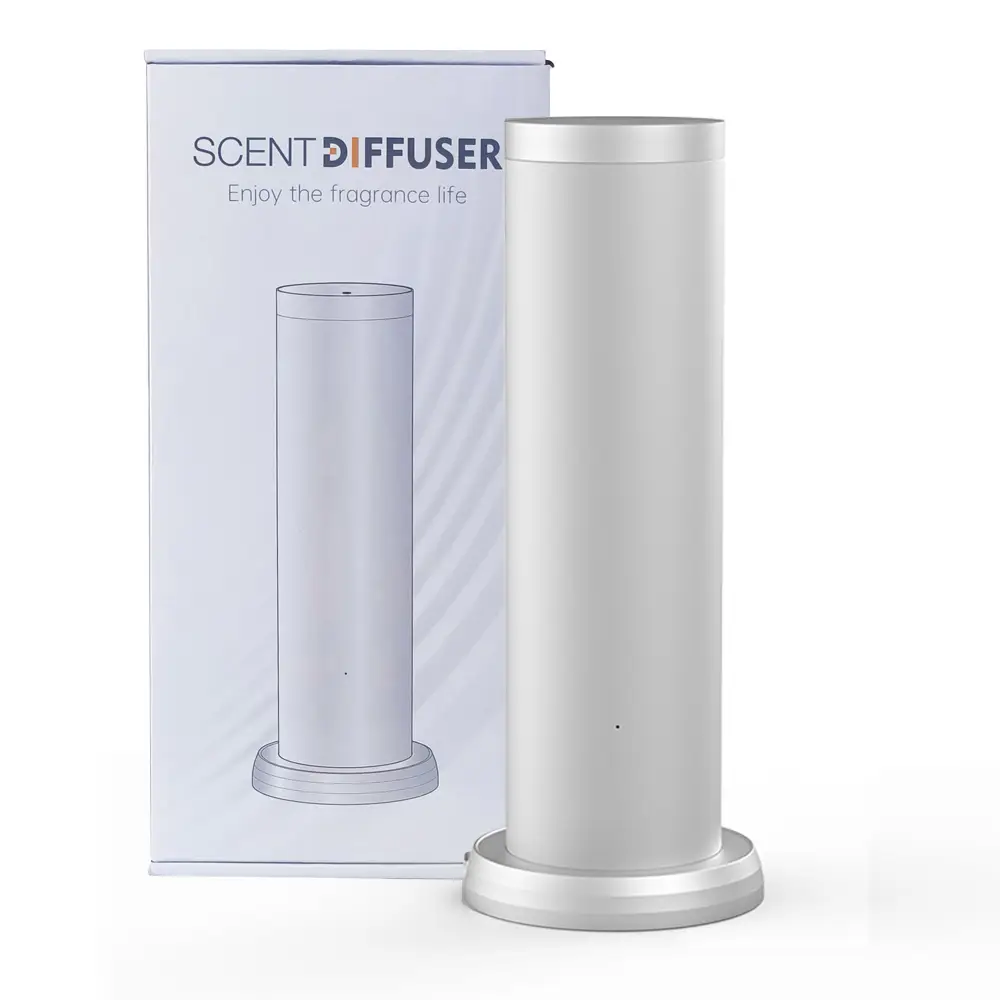
Coverage should not be used as a reason to buy the largest machine. Excess capacity can encourage higher output and more noticeable cycling. A 100 m3 model may suit a small bedroom if it can run gently, while an open-door room may need Stream2's listed coverage at a low duty cycle. Choose the smallest model that meets the fragrance target without maximum output all night.
Which Quiet Bedroom Diffuser Should You Choose?
Choose by room size, sleep schedule, power preference, refill tolerance, and sound sensitivity. The following recommendations use published specifications and remain conditional on a sample test.
Best overall starting point: CNUS Stream2
Stream2 is the clearest match for a buyer who wants a quiet scent diffuser for bedroom use and still expects room-level coverage. Its product page calls it a home scent diffuser, lists quiet working, specifies noise below 32 dB, and provides a fuller set of technical details than many consumer listings: 150 ml capacity, 400 m3 coverage, 5 W power, DC 12 V input, aluminum main material, 0.57 kg weight, and Bluetooth control. The aluminum unibody description may also help with a stable placement, although the page does not provide a vibration-isolation test.
Stream2 is suitable to investigate when the bedroom is larger, connected to a hallway, or used as a guest room where the owner wants schedule control. Bluetooth control can reduce the need to reach across a dark room, but the buyer should confirm whether app notifications, connection sounds, or scheduled start behavior are acceptable. Ask for the operating instruction and the test mode behind the <32 dB specification before making a final low-noise claim.
Best compact option: CNUS X3Art
X3Art is a strong candidate for a small bedroom, bedside corner, or home/car user who wants a compact product. The page lists less than 32 dB, 100 m3 coverage, a 10 ml oil capacity, 2 W power, DC 5 V input, composite PP construction, and a 0.41 kg weight. Its smaller reservoir and lower power can make the product easier to place, but the buyer must pay attention to refill frequency and the sound of short atomization cycles.
The 100 m3 headline is not a guarantee of the same scent level in every bedroom. Door position, ventilation, bedding, distance from the pillow, and the surface under the unit all affect perception. Keep the bottle upright and use only a thin, non-blocking isolation mat if needed.
Best portable option: CNUS X3Pro
X3Pro lists less than 34 dB, 100 m3 coverage, a 10 ml capacity, 2 W power, DC 5 V input, aluminum alloy body and atomizer, and 0.3 ml/h plus or minus 5% oil consumption. The page describes a portable home/car format and a battery version that can work for up to 60 hours once charged. For a bedroom, the attraction is flexibility: move it away from the bed, use it during reading, or avoid a visible cable if the battery version is confirmed.
The tradeoff is that battery operation and plug-in operation should be tested separately. A charging circuit, low-battery state, or change in output mode could alter the sound profile. X3Pro's aluminum alloy atomizer is a useful material detail for compatibility, but a buyer should still use the approved oil and bottle format. For more on oil selection and why a product label alone does not prove compatibility, see the waterless diffuser oil compatibility guide.
Best wall-mounted coverage candidate: CNUS X2mini
X2mini is designed around a home wall-mounted format and lists 400 m3 coverage, 130 ml capacity, 5 W power, DC 5 V input, composite PP construction, a PP atomizer, and oil consumption of 0.6 ml/h plus or minus 5%. Its published noise value is below 38 dB, so it should not be treated as the first choice for a highly noise-sensitive sleeper when Stream2 or X3Art is available. It may still be useful when wall placement, a larger connected area, or a tidy cable arrangement matters more than achieving the lowest listed number.
Wall mounting can reduce table vibration, but it introduces a different check: a wall can transmit a faint hum into the room or an adjacent room. Confirm the mounting surface, screw or bracket arrangement, oil bottle access, and the distance from the bed. Never mount a machine where a leak could run into electrical equipment or bedding.
How to Read a dB Specification Before Buying
Decibels are logarithmic, and a product page's single number is meaningful only when the test conditions are known. The public Scentsin pages list threshold values such as <32 dB, <34 dB, and <38 dB, but the captured data does not specify microphone distance, room background, A-weighting, output setting, oil formula, or whether the measurement includes the power adapter. Treat each value as a documented product specification rather than a universal promise of silence.
Questions to ask the supplier
- At what distance was the noise measured: at the housing, 0.5 m, 1 m, or another position?
- Was the measurement taken in a quiet room, and what was the background noise before the diffuser started?
- Was the machine on its lowest, normal, or highest output setting?
- Which oil, bottle, atomizer, power supply, and firmware or control mode were used?
- Does the value represent continuous operation, an average, or a peak during atomization?
- Is there a start-up beep, relay click, app sound, or low-battery alert that is excluded from the continuous dB value?
For private-label buyers, tie the approved noise statement to the model revision, output setting, oil, and measurement method. A box that says "silent" without a controlled record is not enough evidence for a sleep-oriented claim.
A Practical Bedroom Noise Test for a Home Buyer
Before committing to a quiet scent diffuser for bedroom use, conduct a short controlled test. A sample test is more useful than a phone recording made beside a running air conditioner because it separates background sound, vibration, and fragrance-cycle noise.
Step 1: Establish the room baseline
Close doors and windows in the way the room is normally used at night. Turn off avoidable noise sources, including televisions, fans, air purifiers, and phone notifications. Record the background sound for at least one minute from the pillow position. If HVAC equipment cycles during sleep, record one cycle separately rather than pretending the room is always silent.
Step 2: Use the intended configuration
Install the exact oil bottle, cap, tube, atomizer, power adapter, and firmware or app mode that you plan to use. Do not test an empty machine and assume the result will be the same when oil is flowing. Use the supplier-approved fragrance formula; an overly thick or contaminated liquid can create sputtering and extra pump work. Make a note of the oil batch and the starting fill level.
Step 3: Measure at the sleeping position
Place the diffuser where it would realistically operate, then measure at the height and distance of the sleeper's head. Also take a 1 m reading if the supplier uses that distance. Use the same A-weighted setting and averaging period for every model. A phone app can show a rough comparison, but a calibrated sound level meter is more defensible for a product review, a warranty record, or a supplier approval.
Step 4: Test the schedule, not just the first minute
Run the lowest practical output, the normal output, and the planned night schedule. Listen for the first start, each atomization pulse, a refill or low-oil condition, and the stop command. A unit that is quiet during continuous operation may still wake a light sleeper when it starts every few minutes. Record whether the device vibrates on the table, shifts position, or touches a wall.
Step 5: Repeat after placement changes
Test on a solid table, a shelf, and the planned bedside surface if they are different. Add a thin non-slip isolation layer only after confirming that it does not restrict airflow or create heat issues. Do not place the diffuser inside a drawer, under bedding, or behind curtains. Repeat the test after several hours because residue, a changing oil level, or a warm adapter can change the sound.
| Test point | What to record | Why it matters in a bedroom |
|---|---|---|
| Background level | Room dB before start, HVAC state, time of day. | A diffuser reading cannot be interpreted without knowing the room baseline. |
| Continuous run | Average sound, tonal hum, vibration, and visible movement. | Low-level hum can be more distracting than a short, softer pulse. |
| Start and stop | Click, beep, motor ramp, or sudden vibration. | Scheduled cycling may be noticed during sleep even when the average dB is low. |
| Oil flow | Sputter, uneven atomization, leakage, residue, and consumption. | An oil-path issue can create noise and may damage the device. |
| Placement | Surface, wall contact, distance to bed, cable or battery state. | Furniture and walls can amplify or transmit a small vibration. |
A personal buyer does not need a laboratory report; the purpose is to prevent a mismatch between a product-page threshold and the actual sleep environment. Suppliers and retailers should keep the record with the approved sample and repeat it after an atomizer, housing, power supply, oil, or firmware change.
Compare the Compact X3Art Bedroom Candidate
How Placement Changes Bedroom Noise and Scent
Placement determines both perceived noise and fragrance concentration. A diffuser next to the pillow may seem convenient, but it places every start-up pulse and any oil smell close to the listener. A diffuser at the opposite side of the room can make a low-level sound less noticeable and distribute the fragrance more evenly, provided the room's airflow does not carry the scent directly into the bed.
Use a stable, non-resonant surface
Solid furniture usually transmits less vibration than a thin hollow cabinet. Keep the unit level, upright, and clear of the edge. If a mat is used, choose one that is stable, thin, and compatible with the device's heat and ventilation requirements. Do not place a waterless or oil atomizing unit on top of books, bedding, or a fabric surface that could cover an intake.
Keep distance from the pillow and wall
For a bedside arrangement, start with the device farther from the pillow than the charging cable requires. Avoid pressing the housing against a wall because a low hum can travel through the surface. For X2mini wall mounting, confirm that the chosen wall is structurally suitable and that the mounting hardware does not create a loose panel that rattles during operation.
Use a schedule instead of maximum output
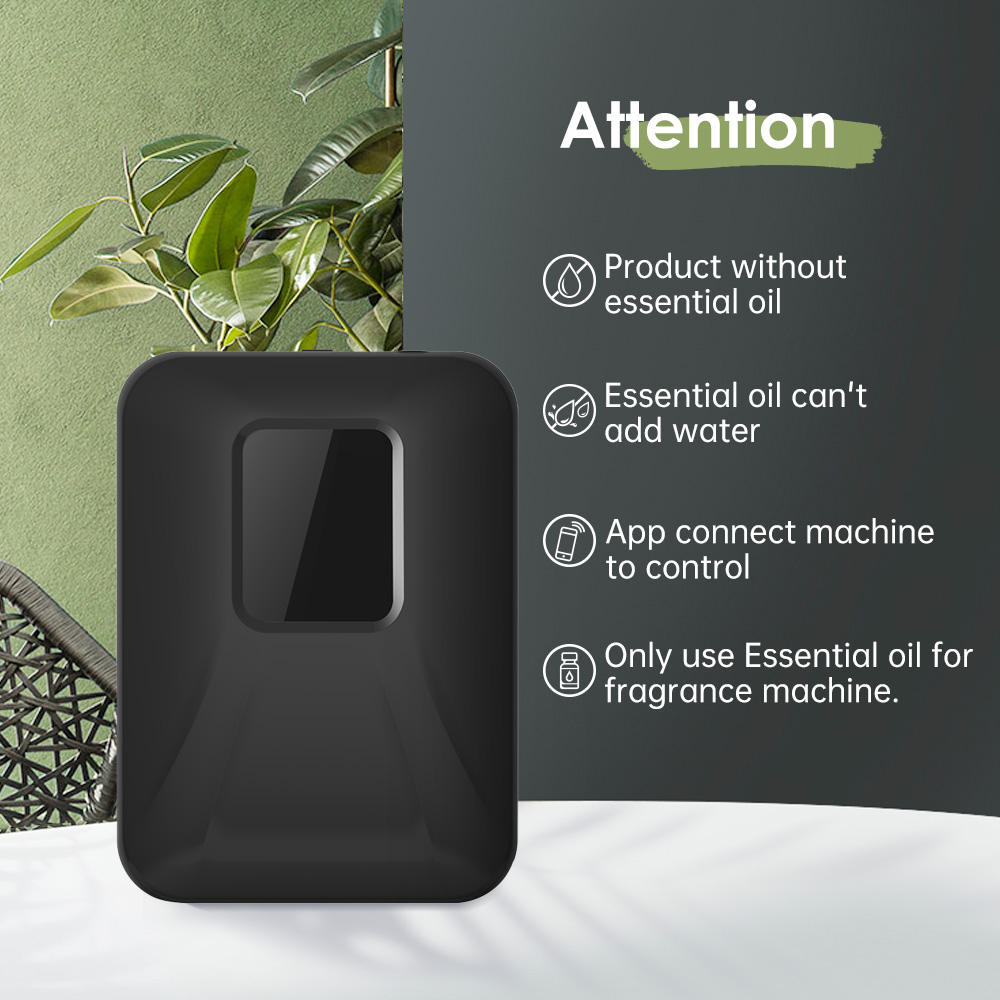
Bedroom scent is usually more comfortable when the device runs in controlled intervals rather than at the strongest output all night. A schedule reduces oil use and gives the nose time to reset. The exact interval should follow the model's instructions and the user's preference. Do not add water to a waterless machine or change the oil with an unapproved carrier to reduce intensity. Adjust the output or operating time within the supported controls.
Account for HVAC and open doors
An air conditioner, fan, or open door can carry fragrance away from the sleeping area and make the user increase the output. That can create more pump or atomization cycles and make the machine more noticeable. First improve placement and schedule, then reassess the fragrance strength. A larger coverage number is not a substitute for understanding airflow.
Oil, Atomizer and Refill Choices for a Quiet Bedroom
Quiet performance is partly a liquid compatibility problem. A diffuser that is quiet with an approved formula may sound different with a thicker, resinous, contaminated, or incorrectly bottled oil. The X3Pro page lists an aluminum alloy atomizer and a reference consumption of 0.3 ml/h plus or minus 5%; X2mini lists a PP atomizer and 0.6 ml/h plus or minus 5%. These are useful engineering details because the oil path and expected flow are part of the system.
Do not use cooking oil, massage oil, an unlabeled decant, or reed diffuser liquid simply because the scent is pleasant. Do not assume that every essential oil is suitable for every waterless machine. Confirm the approved formula, bottle connection, cleaning method, and storage conditions. A new oil should be tested for leakage, residue, start-up, atomization, and sound before it becomes the bedroom refill.
When changing fragrance, stop the device and follow its instructions. Residue in the bottle neck, tube, or nozzle can change the first cycles of a new oil. If the machine begins to sputter or hum after a refill, stop and inspect the connection rather than increasing the output. The Scentsin compatibility guide for waterless diffuser oil provides a separate checklist for viscosity, carrier, bottle, atomizer, and sample approval.
Bedroom Model Comparison by Buyer Scenario
Use this table to narrow the next product page to one or two models. It is not a replacement for the noise test. The phrase "best starting point" refers to the match between the published specification and the bedroom use case, not a universal ranking for every room.
| Bedroom need | Model to investigate | Published evidence | Final check |
|---|---|---|---|
| Most noise-sensitive sleeper with a medium or connected room | Stream2 | Home format, <32 dB, 400 m3, 150 ml, 5 W, aluminum, Bluetooth. | Verify schedule pulses, app behavior, and actual sound at the pillow. |
| Small bedroom or bedside use with compact refill | X3Art | <32 dB, 100 m3, 10 ml, 2 W, composite PP. | Check short atomization pulses and bottle connection. |
| Bedroom and car use, or flexible battery placement | X3Pro | <34 dB, 100 m3, 10 ml, 2 W, aluminum alloy, up to 60 hours listed for battery version. | Test battery, charging, and plug-in modes separately. |
| Wall placement or larger connected home area | X2mini | <38 dB, 400 m3, 130 ml, 5 W, PP body and atomizer. | Confirm wall vibration and compare against a <32 dB candidate. |
| Buyer attracted to an aluminum "silent" model | SA600 | Silent wording in title; 600 cbm, 150 ml, 8 W, 12 V, aluminum, CE and RoHS listed. | Request numerical dB evidence or conduct a sample measurement. |
Bedroom Safety and Comfort Checks
A low-noise machine is not automatically the right bedroom product. The device must be placed and operated so that oil, cables, heat, and fragrance concentration do not create a separate problem. Keep the unit away from direct contact with bedding, water sources, heaters, and unstable shelves. Use the supplied power adapter and follow the operating instructions for charging, cleaning, and storage.
Fragrance sensitivity is personal. Start with a lower schedule and stop if the scent is irritating. Do not describe a diffuser as a medical treatment or assume that quiet operation makes any oil safe for every person. For homes with children or pets, follow the oil supplier's safety information and keep machine and refill out of reach.
What to Request Before Ordering a Quiet Bedroom Diffuser
A B2C buyer can usually complete this checklist through the product page and a short support message. A retailer or private-label buyer should turn the same fields into a product approval record.
- Exact model number and revision, not only a generic name such as "silent aroma diffuser."
- Noise value, measurement distance, background level, output setting, and whether the value is average or peak.
- Room coverage, capacity, oil consumption, power input, battery behavior, and control method.
- Main material and atomizer material, especially where the oil formula may contact PP, aluminum, acrylic, seals, or tubing.
- Approved oil format, bottle or cartridge connection, cleaning method, and storage requirements.
- Start-up sounds, scheduled-cycle behavior, app or Bluetooth notifications, and low-oil alerts.
- Warranty period and the conditions that could void it, including unauthorized oils or modifications.
- Sample availability, packaging, order quantity, and production timing for a private-label or wholesale request.
Several Scentsin pages state that samples are welcome and sample production can take 3-5 days; bulk timing depends on quantity. Confirm the current quote, availability, packaging, and sample result before ordering.
Frequently Asked Questions
1. What is the quietest scent diffuser for a bedroom?
Based on the current published product specifications, Stream2 and X3Art are the strongest starting candidates because both list a noise level below 32 dB. Stream2 is the better fit when the room needs 400 m3 listed coverage and scheduled control; X3Art is the more compact 100 m3 home/car format. A live test is still required because the public pages do not state one common acoustic test standard.
2. Is a diffuser below 32 dB silent?
No. Below 32 dB is a useful published threshold, but it is not the same as inaudible in every bedroom. Background noise, distance, furniture, output mode, oil, and start-up sounds change what a sleeper hears. Ask how the number was measured and test the device at the pillow position.
3. Is Stream2 suitable for a bedroom?
Stream2 is identified as a home scent diffuser and lists below 32 dB, 400 m3 coverage, 150 ml capacity, 5 W power, DC 12 V input, aluminum construction, and Bluetooth control. Those specifications make it a strong bedroom candidate on paper. Confirm the operating schedule, app behavior, oil, and measurement conditions before purchase.
4. Is X3Art quieter than X3Pro?
The published thresholds are below 32 dB for X3Art and below 34 dB for X3Pro, so X3Art has the lower listed value. X3Pro may still be preferable when portability, battery operation, or an aluminum alloy atomizer matters. Do not treat a two-dB product-page difference as a guaranteed experience without testing the two units in the same room.
5. Is X2mini a good quiet diffuser for a bedroom?
X2mini can be considered when wall placement and 400 m3 listed coverage matter, but its published noise level is below 38 dB. For a very noise-sensitive sleeper, compare it directly with Stream2 or X3Art. Test the wall, bracket, and connected room because mounting surfaces can change vibration.
6. Does a larger coverage rating make a diffuser noisier?
Not automatically. Noise depends on the atomizer, motor, housing, control mode, output, and placement. A larger machine may be quiet at a low duty cycle, while a compact machine may sound noticeable at maximum output. Choose coverage for the room, then verify the sound and schedule at the intended setting.
7. Should I run a bedroom diffuser all night?
Follow the model and oil instructions rather than assuming continuous operation is necessary. A timed or intermittent schedule can reduce fragrance intensity, oil consumption, and the number of audible start cycles. Start at a lower setting, keep the unit stable and ventilated, and stop if the scent or sound affects sleep.
8. Can I use any essential oil in a quiet waterless diffuser?
No. Quietness does not prove oil compatibility. Use the manufacturer-approved oil or complete a controlled test for flow, atomization, leakage, residue, and sound. Pure or natural wording on an oil label is not enough to prove that it suits the exact bottle, atomizer, seal, and operating mode.
9. What should I do if the diffuser becomes louder after refilling?
Stop the unit and check the bottle, connector, tube, nozzle, oil level, and approved cleaning procedure. The new oil may have a different flow behavior, the connection may be loose, or residue may be restricting the path. Do not add water or an unapproved carrier to silence the machine.
10. Does Scentsin offer samples for bedroom testing?
Several Scentsin product pages state that samples are welcome and that sample production can be 3-5 days, while bulk timing depends on quantity. Ask for the exact model, oil, test setting, noise measurement method, packaging, current lead time, and warranty terms. A sample approval should be tied to the same configuration you plan to buy.
Conclusion
The best quiet scent diffuser for bedroom use is not simply the product with the word "silent" in its title. Start with a documented low-noise specification, match coverage and oil capacity to the actual room, and confirm the model at the sleeping position with the intended oil, bottle, power mode, and schedule. Current Scentsin data makes Stream2 and X3Art the strongest paper candidates at less than 32 dB, gives X3Pro a portable option at less than 34 dB, and positions X2mini as a coverage-focused option at less than 38 dB. SA600 remains a sample-test candidate because its public title uses "silent" without a numerical dB value.
For a B2C purchase, ask for the instruction sheet or measurement conditions, choose the smallest model that can scent the room at a comfortable schedule, and test for vibration as well as continuous sound. For a retailer or private-label team, keep a model-level approval record covering dB method, oil, atomizer, bottle, power supply, output setting, placement, sample date, and revision. This is the difference between a quiet-looking product page and a bedroom diffuser that performs quietly in real use.